
Hove Greyhound Results: The Complete Brighton & Hove Track Guide, Form Archive and Welfare Brief
 Available in US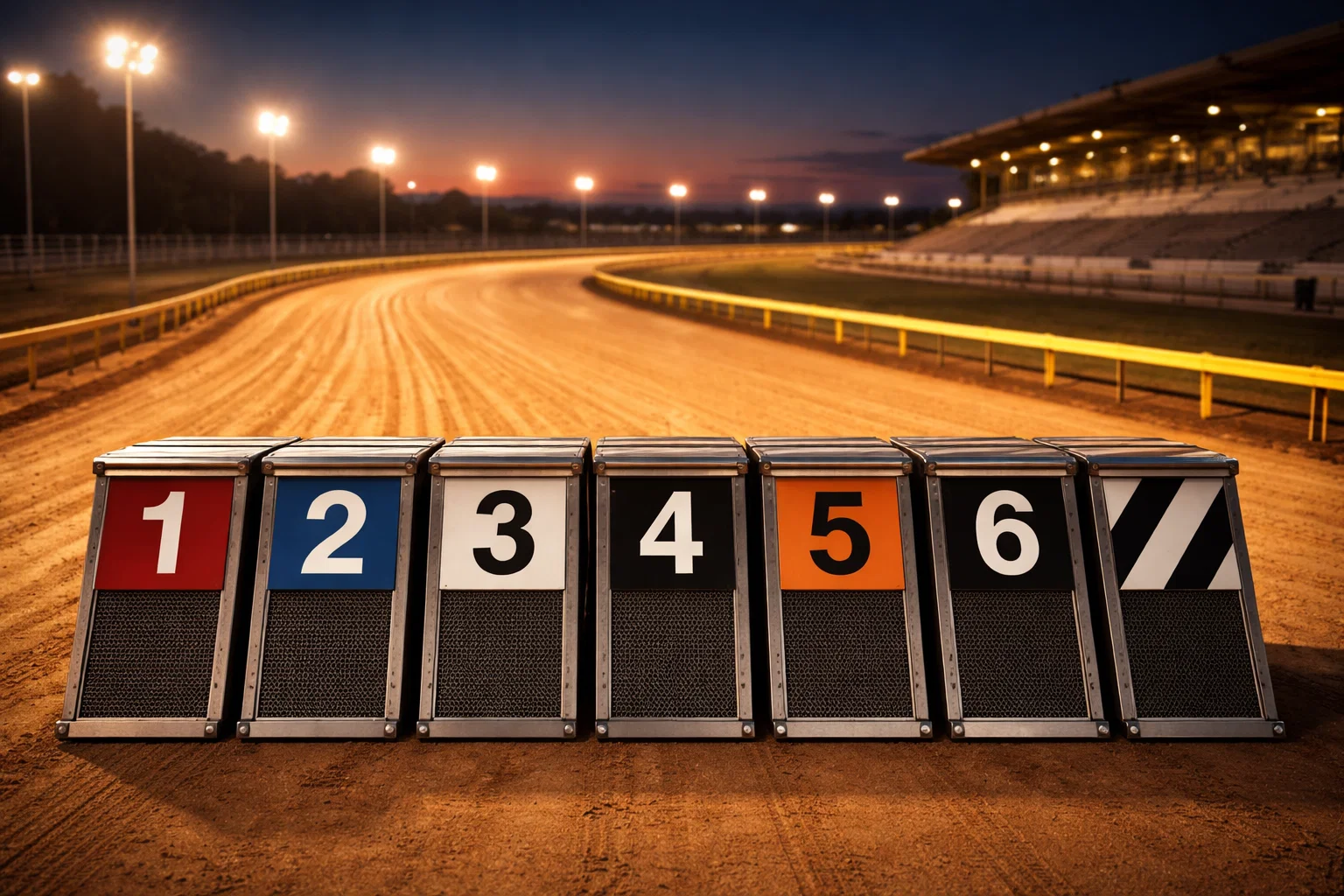
Hove is Brighton & Hove Greyhound Stadium on Nevill Road — the same sand track that opened on 2 June 1928, when nearly 7,000 spectators turned up for the inaugural Hove Stakes. I have spent nine years dissecting racecards, sectional splits and trap-bias data at this circuit, and I still find it remarkable how often people confuse "Hove results" with a simple finishing-order table. A finishing order tells you who crossed the line first. A Hove result, properly read, tells you why — and whether the same dog is likely to do it again next Thursday evening.
Brighton & Hove is a GBGB-licensed venue running five meetings every week: Wednesday and Sunday afternoons, Friday mornings, Thursday and Saturday evenings. Results from each meeting are published through the Greyhound Board of Great Britain under its standardised format — SP, BSP, grading, sectional times, stewards' notes — and this is the material I work with daily. The 515m trip is the stadium's flagship distance, but Hove offers seven race distances in total, from a 285m sprint to a 970m marathon, across a 455-metre left-handed circumference. That variety shapes form in ways most result pages never explain.
This guide connects each finishing time to the track's geometry, its form context and the welfare framework that governs every race run in 2026. It is not a recap of last night's card. It is the reference I wish had existed when I started pulling apart Hove form nearly a decade ago — covering race-reading mechanics, distance profiles, category one fixtures, the trainer landscape, GBGB injury and retirement data, and the legislative shifts that are reshaping UK greyhound racing right now.
Opened
2 June 1928
Capacity
2,200 visitors
Circumference
455 metres
Meetings per week
5
515m record
29.30s — Barnfield on Air, 2007
What Nine Years of Hove Form Data Taught Me — in Five Bullets
- Brighton & Hove runs five meetings weekly across seven distances (285m to 970m) on a 455m left-handed sand circuit — and form rarely transfers between trips because bend geometry changes everything.
- The 515m track record of 29.30s (Barnfield on Air, 2007) is the benchmark: any dog running sub-29.60 is within half a second of the all-time best.
- GBGB's 2024 data shows a 1.07% injury rate across 355,682 runs and a 94% successful retirement rate — record improvements, but 123 trackside deaths keep the political pressure high.
- Wales and Scotland banned greyhound racing in back-to-back votes on 17-18 March 2026; England's 18 licensed stadiums, including Hove, are unaffected for now but face intensifying scrutiny.
- Off-course greyhound turnover stands at £794 million against a £16.8 billion GB gambling market — the sport's commercial base is shrinking even as BAGS volume grows.
How to Read Hove Race Results
The first time I opened a Hove result sheet, I thought I was reading a spreadsheet designed to confuse me on purpose. Six columns of abbreviations, a string of numbers that could mean anything, and a set of prices that seemed to belong to two different markets — because they did. It took about three evenings of cross-referencing before the layout clicked, and once it clicked, every result I read after that told me a story instead of a statistic.
A single Hove race result contains the trap number (1 through 6, colour-coded), the dog's name, weight, trainer, grade, recent form line, finishing position, finishing time, sectional time, and two prices: SP and BSP. Each piece feeds into the next. The grade tells you the competitive band the dog runs in — A1 at the top, A9 at the bottom — and it shifts after each race depending on performance. The form line shows the dog's last six finishing positions, reading left to right from most recent. A line reading 1-1-2-1-3-1 suggests consistency; a line reading 6-5-4-6-5-6 suggests the dog is dropping through the grades or struggling at the current level.
SP (Starting Price) — the industry-agreed price returned by on-course bookmakers at the moment the traps open. It is the default settlement price for most off-course wagers on greyhound racing.
BSP (Betfair Starting Price) — the volume-weighted price on the Betfair exchange at the off. It often diverges from SP on lower-liquidity BAGS cards because exchange volume is thinner in the afternoon.
Grading (A1-A9) — the GBGB classification ladder for open-race greyhounds at each track. A dog's grade is recalculated after every race based on finishing time and position relative to grade peers.
Sectional time — the clock to a fixed point on the circuit, typically the first bend. At Hove, the sectional reveals early pace — a dog that runs a fast sectional but fades in the finish is a different proposition from one that starts slowly and closes hard.
BAGS (Bookmakers Afternoon Greyhound Service) — the commercial framework that supplies afternoon greyhound fixtures to licensed betting shops. Hove's Wednesday and Friday meetings are BAGS fixtures; evenings and Sundays carry a different card profile.
Interpreting these columns together is a skill that takes time to develop, and it is the foundation of everything else in this guide. For a column-by-column breakdown of every field on the card — from trap colour codes to analyst notes and stewards' comments — I have written a detailed racecard reading guide that goes deeper than any overview can.
HOVELANE · proprietary form model
Hove Time Decoder
Turn a raw Hove finishing time into a grade-equivalent speed rating, a lengths-off-benchmark figure and a run-style profile.
A9 parA1 parRecord class
- Going-corrected time
- —
- Benchmark for distance
- —
- Lengths off benchmark
- —
- Run-up phase
- —
- Closing phase
- —
- Draw context
- —
—
Benchmarks are HOVELANE model calibrations for the 455 m Hove circuit, anchored on the 515 m record of 29.30 s. Analytical output only — not a prediction and not betting advice. 18+.
Where Official Hove Results Are Published
Hove results flow through a single regulated pipeline. Every race run at Brighton & Hove Greyhound Stadium is recorded by the GBGB and published on its official results portal, typically within minutes of the last race on a given card. The GBGB page for Hove includes the full finishing order, all six trap times, sectional data, SP, BSP where available, and any stewards' enquiry outcomes.
Beyond the regulator, results are syndicated through Satellite Information Services (SIS), which feeds live data and video to licensed bookmakers and media partners. Timeform publishes Hove results with its own commentary and ratings layer. At The Races carries the ARC-affiliated feed. The official Brighton & Hove stadium website redirects its results page to the GBGB database rather than hosting its own — a common pattern among GBGB tracks, and one that means the regulator's site is always the canonical source.
If you are cross-checking a result from a third-party aggregator, the fastest way to verify is to match the finishing time, trap and SP against the GBGB listing. Discrepancies are rare but not impossible, particularly on BSP where different platforms snapshot the exchange at slightly different moments before the off.
For yesterday's results, today's card or archive lookups, the GBGB results portal lists every GBGB-licensed track including Hove. Filter by date, track and distance to isolate the race you need.
Hove Track Distances and What They Mean for Form
I once watched a dog break the A3 grade at 515m by three lengths on a Saturday evening and then finish last over 695m the following Wednesday. Same dog. Same week. Same track. The only variable was distance — and distance at Hove changes everything because of what the circuit's 455-metre circumference does to bend geometry and stamina demand at each trip.
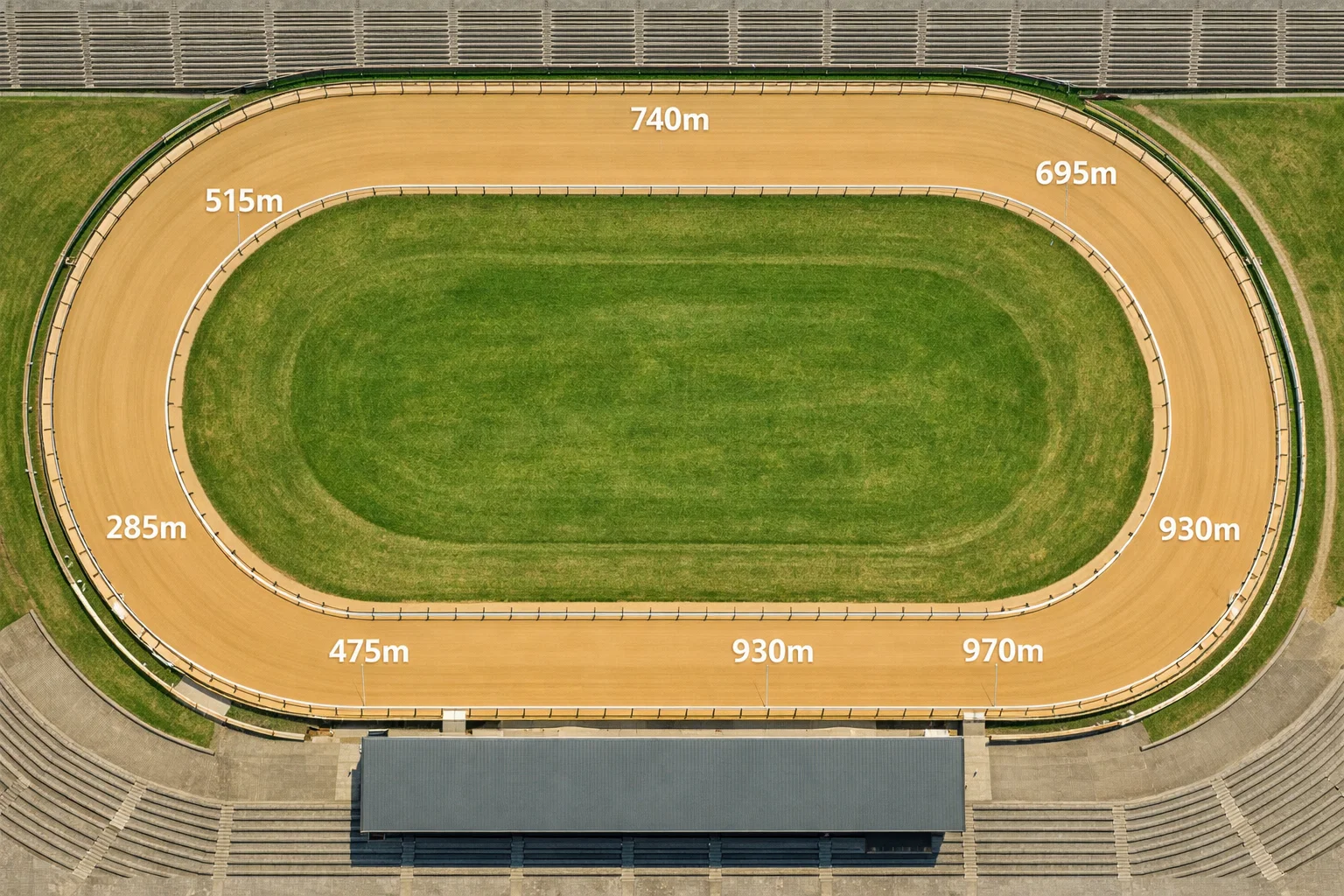
Hove offers seven race distances: 285m, 475m, 515m, 695m, 740m, 930m and 970m. That is one of the widest distance menus on any licensed UK track, and it means form from one trip rarely transfers cleanly to another. A 285m sprint is decided before the first bend. A 970m marathon requires a dog to negotiate the same set of bends four times, and each lap adds cumulative fatigue that favours a totally different running style.
The 515m trip is the stadium's flagship — the distance at which the track record stands at 29.30 seconds, set by Barnfield on Air in 2007 — and the one most commonly carded across all five weekly meetings. It is roughly one full lap plus a run-in, which means a 515m race tests both early pace (the sectional to the first bend) and finishing stamina through the final straight. Dogs that win here tend to combine a clean break from the traps with enough closing speed to hold position through the last 80 metres.
For those serious about form study at specific distances, I have assembled a full circuit and distance breakdown that maps each trip against bend count, trap placement and the type of runner each distance rewards.
When comparing Hove times with results from other UK tracks, always account for circumference. Hove's 455m circuit produces tighter bends than, say, Romford's 390m track or Monmore's 420m oval. Tighter bends at a longer circumference mean more ground lost for wide-runners per lap — a factor that barely registers in raw finishing times but shows up sharply in sectional splits.
Circumference, Bends, Trap Geometry
The 455-metre circumference at Hove makes it a mid-sized sand track by UK standards. That single number — 455 — dictates bend radius, and bend radius dictates how much ground a wide-running dog concedes per turn. On a sprint like the 285m, which involves one bend, the penalty is small. On a 970m marathon involving eight bends, a wide runner can lose two to three lengths cumulatively against a rail-hugger, which is enough to turn a winning margin into a finishing-order reversal.
Hove is a left-handed circuit, meaning dogs run anti-clockwise. Trap 1 (red) sits on the rail; trap 6 (striped) sits widest. The run-up distance from traps to the first bend varies by race distance. On the 515m, the run-up is long enough that a dog drawn in trap 5 or 6 can still reach the rail before the bend if it breaks sharply. On the 285m, the run-up is shorter, and trap 1 has a measurable structural advantage because there is simply less straight track available to cross over.
Sand surface at Hove was relaid after the 1987 changeover, and the going is generally consistent across seasons — unlike turf circuits where ground condition varies with weather. That consistency is one reason Hove form tends to be more predictable than results from dual-surface venues. It also means sectional comparisons between meetings held weeks apart are genuinely valid, provided the dog's weight has not shifted significantly.
Race Week Structure and Fixture Calendar
Five meetings a week sounds relentless until you realise each meeting has a different character. I learned this the hard way by treating a Friday morning BAGS card the same as a Saturday evening open-race fixture and wondering why the form lines didn't match. The answer is simple: different meetings attract different grades, different fields and different levels of bookmaker attention, and the dogs know none of this — but the data looks completely different depending on which session you are analysing.
Hove's weekly schedule runs as follows: Wednesday afternoon (BAGS), Friday morning (BAGS), Sunday afternoon (leisure/open), Thursday evening (graded mix) and Saturday evening (headline graded and category-race fixtures). The two BAGS meetings — Wednesday and Friday — feed into the Bookmakers Afternoon Greyhound Service, which generates over 25,000 races per year across 74 licensed-track meetings per week nationwide. These cards tend to feature middle-to-lower grade runners and shorter fields, and the SP market is thinner because exchange liquidity is lower during working hours.
Wednesday
Afternoon — BAGS
Friday
Morning — BAGS
Sunday
Afternoon — Open
Thursday
Evening — Graded
Saturday
Evening — Headline
Thursday and Saturday evenings are where the strongest form emerges. Saturday is the premium slot — the night most likely to host category-race heats or finals, the night when attendance at the 2,200-capacity stadium is highest, and the night when the SP market reflects genuine weight of money. If you are cross-referencing results across multiple meetings and notice a dog posting faster times on a Saturday than on a Wednesday, the shift is partly explained by the stronger competition level drawing a harder early pace.
The fixture list for the current week is published by the official Brighton & Hove stadium site and updated by GBGB. BAGS fixtures are coordinated through SIS to avoid scheduling clashes with other licensed tracks.
Category One Races at Hove: Regency, Sussex Cup, Brighton Belle, Olympic
There are category one races scattered across GBGB-licensed tracks up and down the country, but most stadiums host one, maybe two. Hove holds four. That concentration — Coral Regency, Sussex Cup, Brighton Belle, Olympic — gives the stadium a fixture calendar that punches well above its regional weight, and it is one reason trainers from outside Sussex route dogs to Hove for specific campaigns rather than treating it as a provincial circuit.
The Coral Regency is the centrepiece. It has carried a prize fund of £20,000 since it was first staged in 1948, making it one of the longest-running category one fixtures in British greyhound racing. The race is run over 515 metres and draws entries from top-grade kennels nationally. The Sussex Cup, also run over the flagship distance, serves as a regional anchor — the race where Brighton & Hove trainers tend to field their strongest runners in front of a home crowd. The Brighton Belle, elevated to category one status in 2023 with a £10,000 purse, is bitches-only over 515m — a format that creates a distinct competitive field and has quickly established itself as one of the stadium's most anticipated fixtures. The Olympic rounds out the quartet as one of Hove's oldest stakes, tying the calendar to the stadium's pre-war heritage.
Each race carries GBGB category one classification, which means it meets minimum criteria for prize fund, field quality and regulatory oversight. Category one is the highest tier in the GBGB race hierarchy — above category two, three and open graded — and the classification determines everything from entry requirements to drug-testing frequency on finals night.
A deeper look at prize structures, recent winners and the economics behind each fixture is available in the dedicated Hove category one races guide.
| Race | Distance | Prize fund | Status since | Open to |
|---|---|---|---|---|
| Coral Regency | 515m | £20,000 | 1948 | Open |
| Sussex Cup | 515m | Varies | Established | Open |
| Brighton Belle | 515m | £10,000 | 2023 (Cat-1) | Bitches only |
| Olympic | 515m | Varies | Established | Open |
Coral Sponsorship and the Commercial Frame
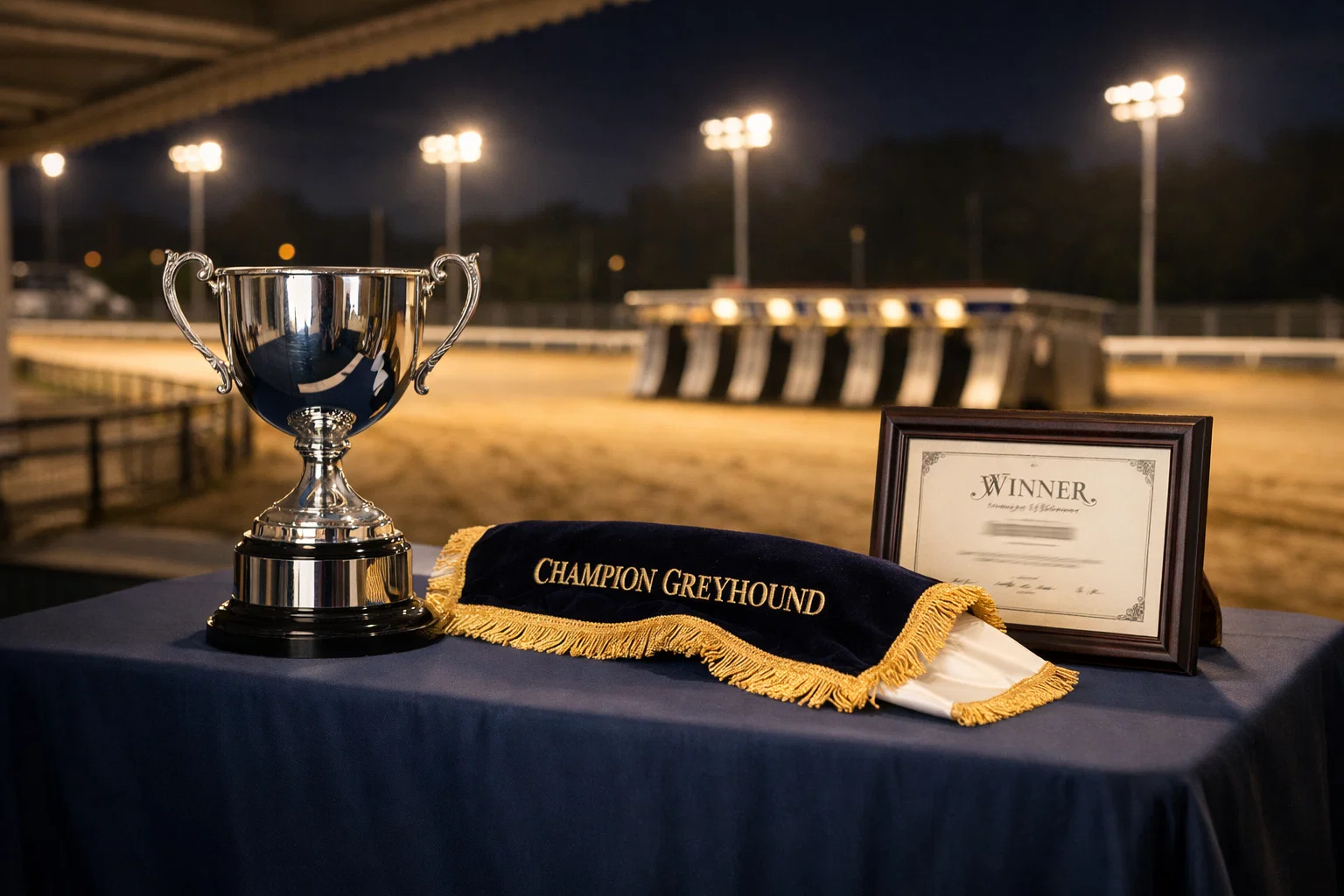
Coral's name is attached to three of the four category one fixtures at Hove — the Coral Regency, Coral Brighton Belle and Coral Finals Night. That branding density is unusual in a sport where sponsorship deals tend to rotate annually and where smaller tracks struggle to secure any title sponsor at all. The arrangement gives Hove a commercial identity that few UK greyhound venues can match, and it ties the stadium's prestige fixtures directly to a major licensed bookmaker's marketing budget.
Revenue from bookmakers, however, is not what it was. Off-course turnover on greyhound racing reached approximately £794 million in the financial year to March 2024, and that figure represents a shrinking share of the wider gambling market. The pressure trickles down to category-race prize funds. The Coral Regency's £20,000 purse has held steady for decades, but maintaining it requires a sponsorship commitment that becomes harder to justify when greyhound betting's share of total gambling spend is contracting year on year.
For the form analyst, the commercial frame matters because prize money determines field quality. A £20,000 race attracts different dogs — and different preparation levels — than an open A1 graded race with a modest winner's purse. When you read results from a Coral-sponsored finals night, you are reading form shaped by a higher competitive ceiling than the regular weekly card.
History, Records and the Ballyregan Bob Legacy
I keep a framed photograph of the 1928 Hove Stakes programme on the wall above my desk — not because it is valuable, but because it is a useful reminder that this track has been generating data for nearly a century. Brighton & Hove Greyhound Stadium opened on 2 June 1928. The first race attracted close to 7,000 spectators, which by today's standards would overflow the venue's 2,200 capacity by a factor of three. That opening card established Hove as a permanent fixture in the UK greyhound calendar, and the stadium has run continuously since, through war, surface changes and a cultural shift that reduced the national audience from tens of millions to a committed niche.
The name that towers over Hove's history is Ballyregan Bob. Trained by George Curtis at the stadium, Bob won 32 consecutive races — a world record — culminating on 9 December 1986. The streak was not just a run of wins; it was a public event. BBC cameras were at Hove for the record-breaking night, and the footage became one of the most replayed sequences in British greyhound racing. Curtis, a Hove-based trainer for decades, built a kennel operation around the track that influenced how subsequent generations of trainers — Bob Young, Brian Clemenson, Seamus Cahill — approached Hove as a home circuit rather than a satellite venue.
The stadium's surface was changed in 1987, a year after the Ballyregan Bob streak, which reset the track record book. Times recorded before the surface change are not directly comparable to modern results, a detail that catches out researchers who try to line up 1980s form data with current sectional analysis. The post-1987 record book is the one that matters for anyone working with contemporary Hove results.
For the full chronology — including the 1962 visit by HRH Queen Elizabeth II, the George Curtis kennel era and distance-by-distance records — the Hove history and records archive covers the timeline from 1928 to the approaching centenary.
Ballyregan Bob's 32 consecutive wins at Hove in 1986 remains the world record for a racing greyhound. The streak was broadcast live by the BBC on the night of the 32nd win — 9 December 1986 — making it one of the most watched greyhound races in British television history.
The 515m Track Record: Barnfield on Air, 29.30s
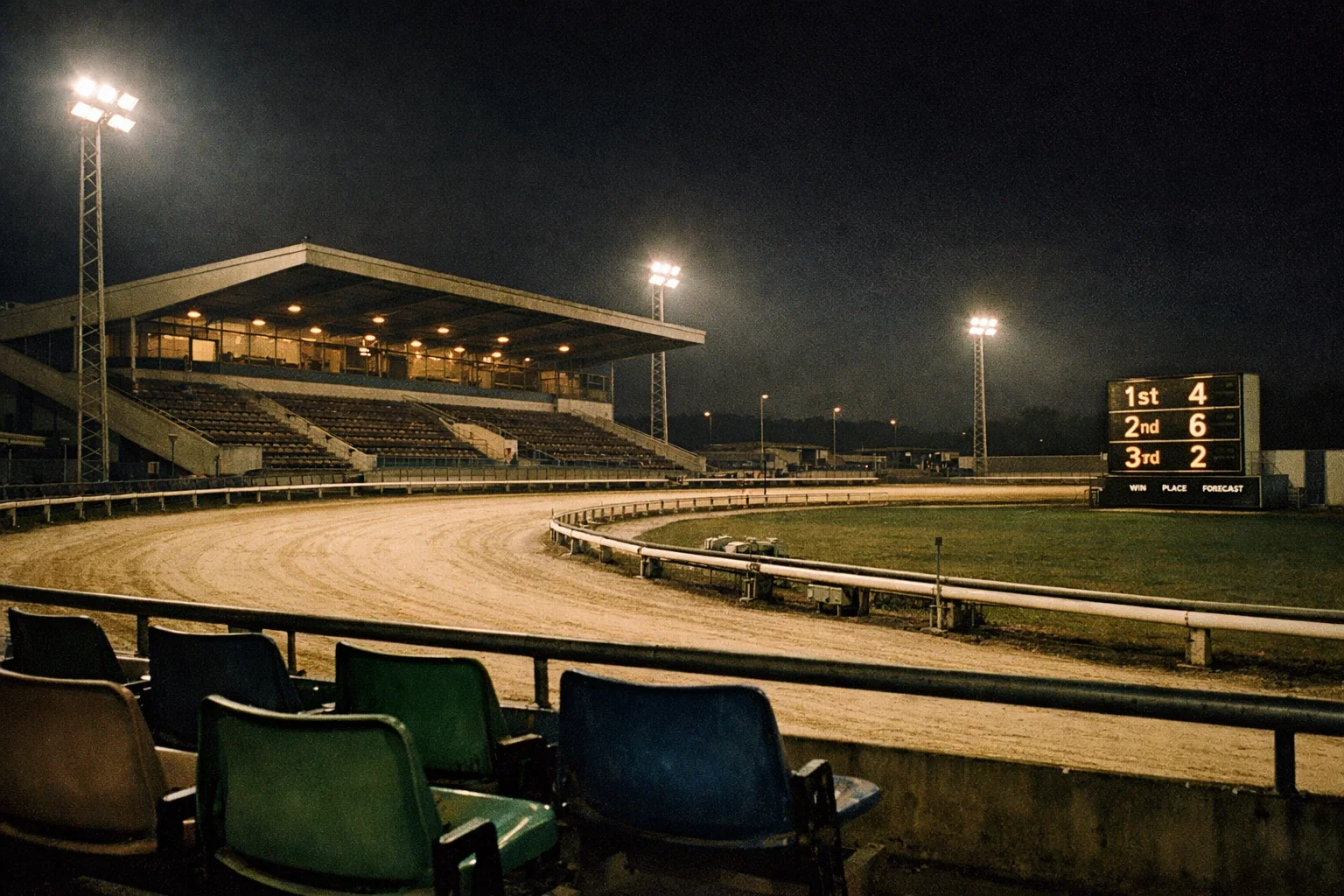
The 515m track record at Hove stands at 29.30 seconds, set by Barnfield on Air in 2007. That time has survived almost two decades of racing, which tells you something about how exceptional it was. Hundreds of dogs have run the flagship distance in the years since — thousands, in fact, across roughly 250 meetings a year — and none has matched it. The record sits in that territory where conditions, dog and circuit aligned on a single night, and the margin between 29.30 and the times regularly posted by top-grade runners (typically 29.50 to 29.80) is the kind of gap that separates an outstanding dog from a very good one.
Barnfield on Air's run also serves as a practical benchmark for anyone reading 515m results at Hove. When a dog posts a sub-29.60, it is running within half a second of the all-time best. When a dog runs 30.20 or slower, it is operating a full second off the pace — and at this distance, a second represents roughly six to seven lengths.
Who Races at Hove: Trainers, Kennels and the Seamus Cahill Setup
Every Thursday evening at Hove, you can stand by the parade ring and watch dogs from eight or nine different kennels circling before the first race. Most spectators see a procession of greyhounds. I see a form map — which trainer has brought runners in condition, which kennel has shifted a dog down a grade, and which handler is trialling a newcomer on the circuit for the first time. The trainer column on a Hove racecard is not decoration. It is one of the most underrated form signals available.
The registered greyhound racing sector across Great Britain employs approximately 500 trainers, 3,000 kennel staff and 700 racecourse officials. Hove draws trainers from across the South of England, but several are based locally and dominate the stadium's graded cards. Seamus Cahill runs one of the highest-profile kennels at Brighton & Hove, with a consistent presence in category one races and a string of graded winners that makes his runners a regular feature on Saturday evening cards. Norah McEllistrim is another name that appears frequently on Hove entries, particularly at middle and staying distances. Around 6,000 greyhounds are registered for racing annually in the UK, with approximately 15,000 owners involved in the sport — but at any given Hove meeting, the talent pool narrows to a handful of kennels whose dogs are conditioned specifically for this circuit.
What separates a Hove-specialist trainer from one who enters dogs here occasionally is knowledge of the 455m circumference — how the bends affect wide runners, which grades suit a dog stepping up, and when to campaign a runner over 515m versus dropping it to 475m to build confidence. Trainers who live within a short drive of Nevill Road can trial their dogs at the circuit more frequently, and that familiarity shows in the results. When I see a Cahill or McEllistrim runner drawn in trap 1 at 515m on a Saturday evening, I weight the form line differently from an out-of-area entry making its first Hove start.
Trainer information is listed on every Hove racecard and result sheet. The GBGB publishes a trainer directory that confirms licensing status, kennel location and registered runners for the current season.
Welfare, Injury Data and Retirement Outcomes
Nobody who works with greyhound form data can ignore the welfare numbers. I say that not as a moral statement but as a practical one — welfare data published by the GBGB is now woven into how the sport is regulated, funded and politically defended, and understanding those figures is part of understanding the environment in which every Hove result is produced.
The track injury rate across all GBGB-licensed tracks dropped to a record low of 1.07% in 2024, calculated across 355,682 individual race runs. That denominator matters: 1.07% means 3,809 recorded injuries from over a third of a million starts. The GBGB's own commentary on the data states that the track fatality rate halved from 0.06% in 2020 to 0.03% in 2024. Those percentage shifts sound small until you translate them into dogs. In absolute terms, 123 greyhounds died trackside at GBGB-licensed tracks in 2024 — the highest trackside fatality count since 2020, a figure that the Cut the Chase coalition has highlighted as evidence that percentage-based framing obscures the scale of harm. A total of 346 greyhounds died from racing-related causes across the year.
On the retirement side, 5,795 greyhounds left racing in 2024, of whom 94% retired successfully through approved channels — up from 88% in 2018. The Greyhound Board frames this as a structural improvement, pointing to the near-elimination of economic euthanasia: only three greyhounds were put to sleep for economic reasons in 2024, compared with 175 in 2018 — a 98% reduction. Mark Bird, GBGB's Chief Executive, has stated that putting a greyhound to sleep for economic reasons is unacceptable and that the Board has worked to drive that number down systematically.
Counter-readings from campaign groups present a different lens. The Cut the Chase coalition calculates that between 2017 and 2024, a cumulative 4,034 greyhounds died as a result of racing and more than 35,000 sustained injuries. Lisa Morris-Tomkins, Chief Executive of the Greyhound Trust, has said that the number of racing greyhounds who never have the opportunity to experience a home when their career is over remains unacceptable, and that the baseline injury and retirement figures must be improved further.
For anyone reading Hove results in 2026, these numbers are not abstract. They determine whether the sport retains its licence to operate — literally, in the case of Wales and Scotland — and they shape the regulatory conditions under which every card at Brighton & Hove is run. The detailed welfare dataset, including how GBGB calculates each metric and what the academic literature says about injury rates, is the subject of a dedicated welfare and GBGB data analysis.
GBGB publishes annual injury and retirement data in a downloadable commentary document. The 2024 edition covers track injuries, fatalities, retirement outcomes and economic euthanasia across all 18 licensed stadiums. It does not disaggregate data to individual track level, which means Hove-specific figures must be inferred from the aggregate.
The 1.07% injury rate and 94% retirement rate are industry-wide figures across 355,682 race runs. They represent record-level improvements in GBGB's own tracking, but the absolute numbers — 3,809 injuries, 123 trackside deaths, 346 total racing-related deaths in a single year — remain the focal point of political pressure that led directly to the Wales and Scotland bans of March 2026.
Do
- Read the full GBGB commentary document, not just the headline percentages
- Compare year-on-year trends rather than isolated annual figures
- Note that "successful retirement" means placement through an approved GRS homing centre
Don't
- Assume the aggregate injury rate applies equally to every track — GBGB does not publish per-stadium breakdowns
- Conflate "track fatality rate" (deaths at the track) with "total racing-related deaths" (which includes post-race outcomes)
- Treat campaign-group figures and GBGB figures as directly comparable without checking methodology differences
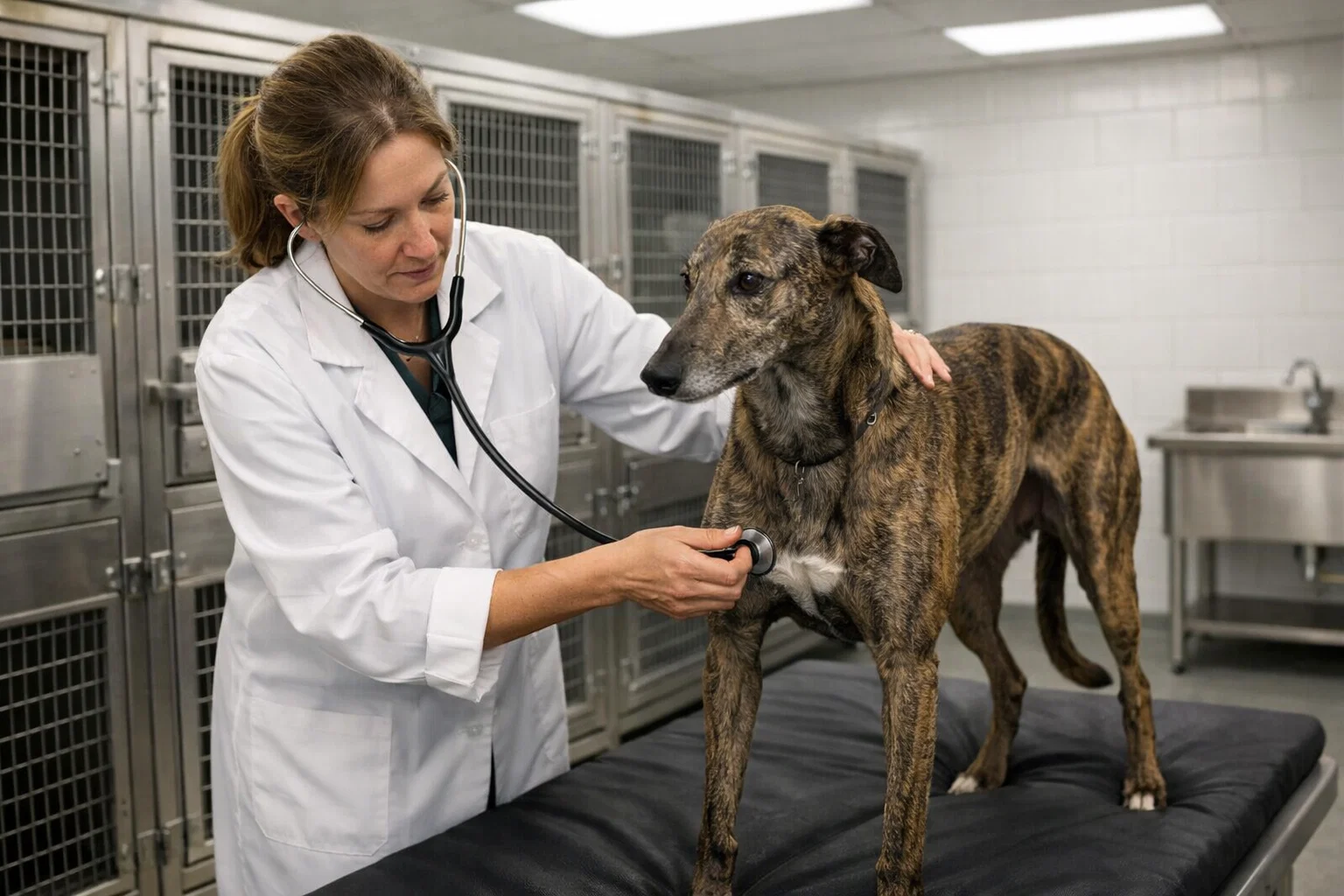
Funding: BGRF Levy and the Injury Retirement Scheme
The money that funds greyhound welfare in Britain comes from two main streams, and neither is as large as the political rhetoric around the sport might suggest. The British Greyhound Racing Fund (BGRF) collected £6.75 million in 2024-25 through a voluntary levy set at 0.6% of greyhound betting turnover from participating bookmakers. That word — voluntary — is the crux. Unlike the statutory Horserace Betting Levy, which compels bookmakers to contribute a fixed percentage of horse racing turnover, the BGRF levy depends on bookmaker goodwill. If a major operator decided to stop contributing, the fund would shrink overnight, and with it the welfare programmes it supports.
The Injury Retirement Scheme, funded in part through the BGRF, has paid out almost £1.5 million since its launch in December 2018. The scheme covers veterinary costs for dogs injured during racing who cannot return to the track but can live comfortably in retirement. Separately, the Greyhound Retirement Scheme (GRS) requires a bond of £420 per greyhound — increased from £400 in 2025 — jointly funded by owners and the GBGB. Since 2020, more than £5.6 million has been paid to approved homing centres under the GRS, supporting over 11,000 greyhounds through the transition from racing to domestic life. Adoptions from those centres rose 37% in the first half of 2025 compared with the same period in 2024, which the GBGB cites as evidence that the homing pipeline is scaling.
Whether these figures are sufficient is a separate question — and one that the legislative votes in Wales and Scotland answered firmly in March 2026. The funding model is built for a sport that generates enough betting turnover to sustain a 0.6% levy at meaningful scale. If turnover continues to decline, the levy delivers less, and the welfare infrastructure it supports becomes harder to maintain.
The 2026 Legislative Landscape: Wales and Scotland Bans
Two votes in two days changed the legal map of British greyhound racing. On 17 March 2026, the Welsh Senedd passed the Prohibition of Greyhound Racing (Wales) Bill by 39 votes to 10, with two abstentions. The following day, 18 March, the Scottish Parliament passed the Greyhound Racing (Offences) (Scotland) Bill by 70 votes to 27, with 19 abstentions. Within 48 hours, greyhound racing went from a UK-wide licensed activity to one that will be unlawful in two of the four home nations.
The Welsh ban includes a transition period running from 1 April 2027 to 1 April 2030, during which Valley Greyhound Stadium — the only GBGB-licensed track in Wales, and one that had invested approximately £2 million in upgraded veterinary, kennelling and track facilities before the vote — must wind down operations. The Scottish legislation is more severe in its penalties: operating a racing track or racing a greyhound in Scotland carries up to five years' imprisonment and a fine of up to £20,000.
Emma Slawinski, Chief Executive of the League Against Cruel Sports, described greyhound racing as harmful throughout a dog's life and called on the UK Government to extend the ban to England. On the industry side, GBGB's Mark Bird called the Scottish Bill a disgrace to legislative process. The gap between these positions is not closing.
England remains one of just nine countries worldwide that still permits commercial greyhound racing. The Scottish Animal Welfare Commission's February 2023 report concluded that welfare for dogs would be improved if they were not involved in racing — a finding that was cited repeatedly during both parliamentary debates. Whether Westminster follows the devolved nations is an open political question, but the regulatory and reputational pressure on English tracks, including Hove, has intensified sharply since March 2026.
The Welsh and Scottish bans do not apply to England. Brighton & Hove Greyhound Stadium continues to operate under its existing GBGB licence. However, the legislative precedent set by both devolved parliaments has created a political environment in which English tracks face increased scrutiny from welfare campaigners, media and parliamentarians.
Wales voted 39-10 on 17 March 2026 to ban greyhound racing with a 2027-2030 transition. Scotland voted 70-27 on 18 March 2026 with penalties of up to five years' imprisonment. England remains unaffected — for now — but the political direction is clear.
What It Means for Hove and English Tracks
Hove sits in England, so neither the Welsh nor the Scottish ban applies to it directly. But the ripple effects are already measurable. The closure of Valley Stadium in Wales will redirect a small number of trainers and dogs toward English tracks, potentially increasing field depth at venues within driving distance of the border. Scotland's ban, once fully enacted, removes the possibility of any future GBGB-licensed track north of Hadrian's Wall — and the Scottish debate leaned heavily on GBGB's own data, which means the same statistics that Hove's regulator publishes are now being used in parliamentary arguments for prohibition.
For form analysts, the practical implication is straightforward: the pool of 18 GBGB-licensed stadiums active in Great Britain is likely to contract. Greyhound racing in the UK supports approximately 5,400 jobs, and any reduction in the licensed track count concentrates both runners and revenue into fewer venues. Hove, as a five-meetings-per-week stadium with four category one races and strong BAGS output, is positioned to absorb displaced runners rather than lose them. Whether that translates to stronger fields or scheduling pressure on kennel capacity is something the 2027 and 2028 card data will answer.
The deeper question is whether the English government considers its own ban. There is no active bill at Westminster, but the volume of parliamentary questions about greyhound welfare has increased since March 2026, and the Labour government's stated position — that the sport supports thousands of jobs and is regulated through GBGB — is now under sustained challenge from the same coalition that secured the Welsh and Scottish votes.
Market Context: GGY, Off-Course Turnover and BAGS
The numbers behind greyhound racing look different depending on which layer of the market you examine. At the top, the Great Britain gambling industry reported a gross gambling yield of £16.8 billion in the year to March 2025 — a 7.3% increase year on year. Online gambling alone accounted for £7.8 billion of that total, growing by more than £900 million in twelve months. Greyhound racing's share of this expanding pie, however, is not expanding with it.
Off-course betting turnover on greyhound racing reached approximately £794 million in the financial year to March 2024. That is a substantial figure in isolation, but it represents a declining proportion of overall gambling spend as the market shifts toward online casino, in-play football and virtual products. The BAGS service — 74 meetings per week, approximately 5,772 greyhounds competing weekly, a 71% increase from 3,360 dogs in 2017 — has grown the volume of racing significantly, but volume growth has not translated into proportional revenue growth because the average stake per race and the bookmaker margin on greyhound racing have both compressed.
GB gambling GGY
£16.8 billion (to March 2025)
Online GGY
£7.8 billion
Greyhound off-course turnover
£794 million (to March 2024)
BAGS meetings per week
74
Mark Moisley, GBGB's Commercial Director, has acknowledged that bookmaker revenue has been declining year on year and warned that if the trajectory continues at its current rate, the sport will face structural issues. That warning sits alongside the growth of online betting accounts — from 17 million in 2014 to over 37 million in 2024 — which demonstrates that people are gambling more, just not on greyhounds in the way the industry's funding model requires. The £6.75 million BGRF levy, calculated at 0.6% of greyhound turnover, only works if turnover holds. If it doesn't, prize funds, welfare budgets and track infrastructure all come under pressure — and Hove, for all its five-meeting-per-week output, is not immune to those economics.
Centenary 2026 and the Road Ahead
The first greyhound race in Britain took place at Belle Vue, Manchester, on 24 July 1926. By January 1947, the sport had reached its peak — an estimated 75 million spectators attending races across 77 licensed tracks in a single year. Those numbers belong to a different country. In 2026, 18 GBGB-licensed stadiums remain, and the centenary is being marked not with a return to mass attendance but with a combined horse-and-greyhound fixture at Dunstall Park on 7 March 2026 — an event designed to generate headlines rather than recapture a vanished audience.
Brighton & Hove Greyhound Stadium opened two years after Belle Vue, in 1928, which means its own centenary falls in 2028. The stadium is entering that milestone as one of the more active licensed tracks in the country: five meetings a week, four category one races, a consistent BAGS contribution, and a history that includes a world-record holder and nearly a century of continuous racing. Whether the centenary is celebrated as the beginning of another century or as the closing chapter of a long one depends largely on what happens in Westminster — but for now, the track is running, the cards are being published, and the data keeps accumulating.
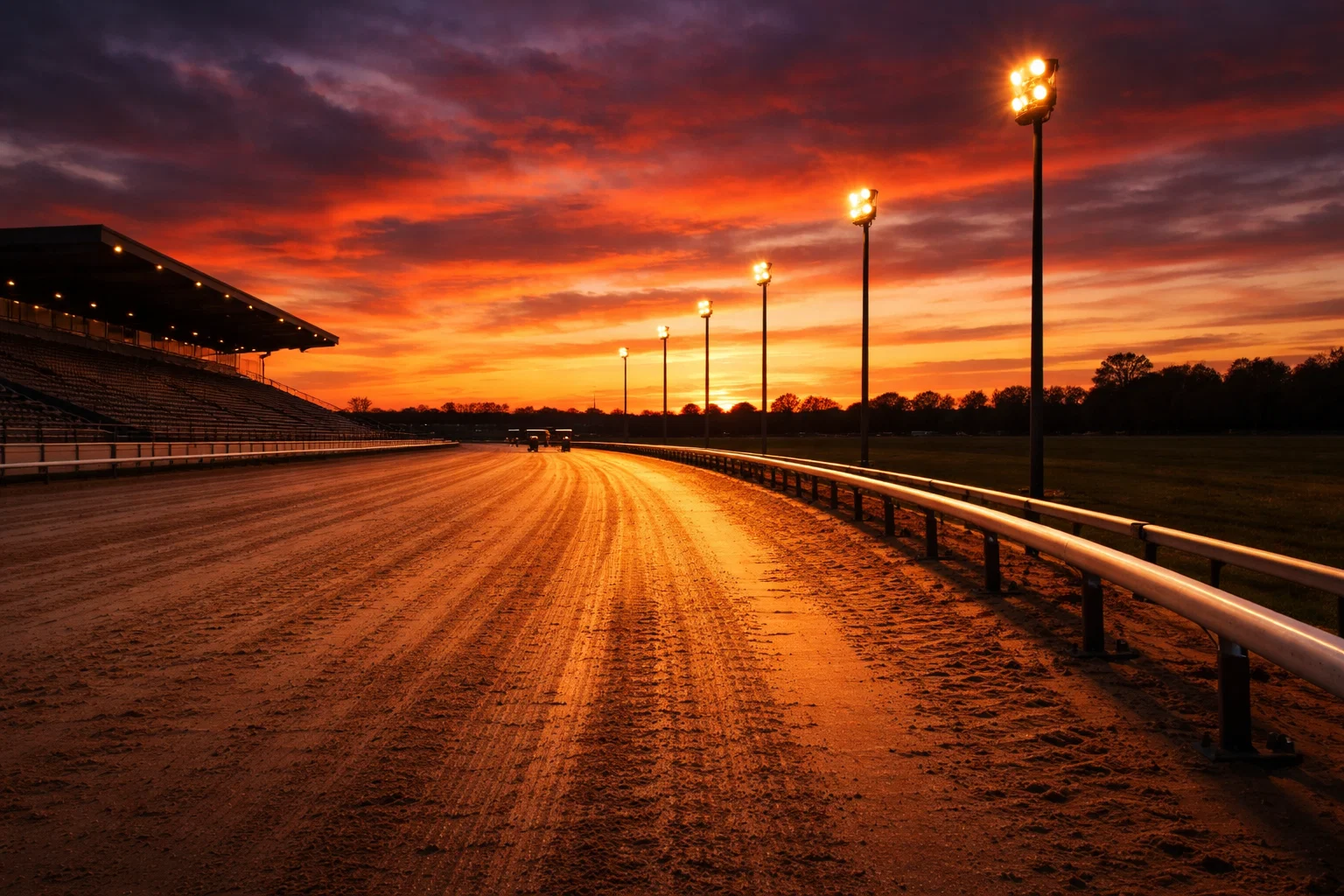
At its 1946 peak, greyhound racing was the second most attended sport in Britain after football. The 77 licensed tracks that existed in January 1947 have since dwindled to 18 — a contraction of more than 75% across eight decades.
The questions below address the most common queries I receive about Hove results, distances, fixtures and the stadium itself — drawn from nine years of fielding them from readers, punters and newcomers to the sport.
Sources and Methodology
The data, statistics and expert statements in this guide are drawn from publicly available regulatory, governmental and industry documents. GBGB injury and retirement figures come from the Greyhound Board of Great Britain's annual Injury and Retirement Data commentary for 2024, published by the regulator. Legislative voting records for the Welsh Senedd and Scottish Parliament are taken from official parliamentary proceedings dated 17 and 18 March 2026 respectively. Gambling industry figures — gross gambling yield, online GGY and off-course turnover — are sourced from the Gambling Commission's annual industry statistics report for the year to March 2025.
Expert quotes are attributed to named individuals and sourced from GBGB press releases, parliamentary testimony, published interviews and statements issued by the League Against Cruel Sports, the Greyhound Trust and the Scottish Animal Welfare Commission. Track-specific details — distances, circumference, capacity, fixture schedule, category one race history — are verified against the GBGB licensed tracks register and the official Brighton and Hove Greyhound Stadium website.
Form analysis and sectional-time interpretation reflect nine years of independent observation at the Hove circuit. No data has been supplied or commissioned by any bookmaker, racing operator or welfare campaign. All figures are presented as published by their original sources and carry no guarantee of future accuracy.
The GBGB publishes its injury and retirement data, licensed track register and Rules of Racing on gbgb.org.uk. Gambling Commission industry statistics are available at gamblingcommission.gov.uk. Welsh and Scottish parliamentary records are searchable through senedd.wales and parliament.scot.
Frequently Asked Questions About Hove Greyhound Results
Where can I find official Hove greyhound results for today and yesterday?
All official results from Brighton & Hove Greyhound Stadium are published by the Greyhound Board of Great Britain on its results portal at gbgb.org.uk. Results are typically available within minutes of the last race on any given card. You can filter by track name (Hove), date and distance. Yesterday's results remain accessible through the same archive — simply adjust the date filter. Third-party sites such as Timeform and At The Races also carry Hove results, but the GBGB listing is the canonical source and the one against which discrepancies should be checked.
What are the main distances raced at Brighton & Hove Greyhound Stadium?
Hove offers seven race distances: 285m, 475m, 515m, 695m, 740m, 930m and 970m. The 515m trip is the flagship distance — the one used for all four category one races and the one at which the track record of 29.30 seconds (Barnfield on Air, 2007) is held. The 285m sprint is the shortest and is decided almost entirely by trap speed. The 930m and 970m marathon trips are among the longest regularly carded at any UK track, and they require a completely different running profile from the middle distances.
What major category one races are held at Hove?
Hove hosts four GBGB category one races: the Coral Regency (£20,000, 515m, open, staged since 1948), the Sussex Cup (515m, open), the Coral Brighton Belle (£10,000, 515m, bitches-only, elevated to category one in 2023) and the Olympic (515m, open). Category one is the highest tier in GBGB's race classification system, and Hove's four fixtures give it one of the densest category one calendars of any licensed stadium in the country.
Who owns and manages Hove Greyhound Stadium?
Brighton & Hove Greyhound Stadium is operated by Coral Racing Limited, which manages the venue under a GBGB licence. The stadium is located on Nevill Road, Hove, and has a capacity of 2,200 visitors, including the Skyline Restaurant which seats over 400. The GBGB oversees regulatory compliance at the track, including stewards' panels, veterinary checks and welfare monitoring.
How often does Hove race each week?
Hove holds five race meetings every week: Wednesday afternoon (BAGS), Friday morning (BAGS), Sunday afternoon (open/leisure), Thursday evening (graded) and Saturday evening (headline graded and category stakes). The two BAGS fixtures feed into the Bookmakers Afternoon Greyhound Service, which coordinates 74 meetings per week across licensed UK tracks. Saturday evening is typically the strongest card in terms of grade quality and attendance.
How is greyhound welfare regulated at Hove and across GBGB tracks?
Every race at Hove is run under the GBGB Rules of Racing, which mandate pre-race veterinary checks, kennelling inspections, weigh-ins, stewards' oversight and post-race sampling. The GBGB publishes annual injury and retirement data — in 2024, the track injury rate across all licensed tracks was 1.07% from 355,682 runs, and the successful retirement rate reached 94%. GBGB has also delivered a 73% increase in routine kennel visits since launching its welfare strategy in 2022. Hove-specific welfare data is not disaggregated from the national total, but the same regulatory framework applies to every meeting at the stadium.
