
Coral Finals Night at Hove: What the Card Looks Like
 Available in US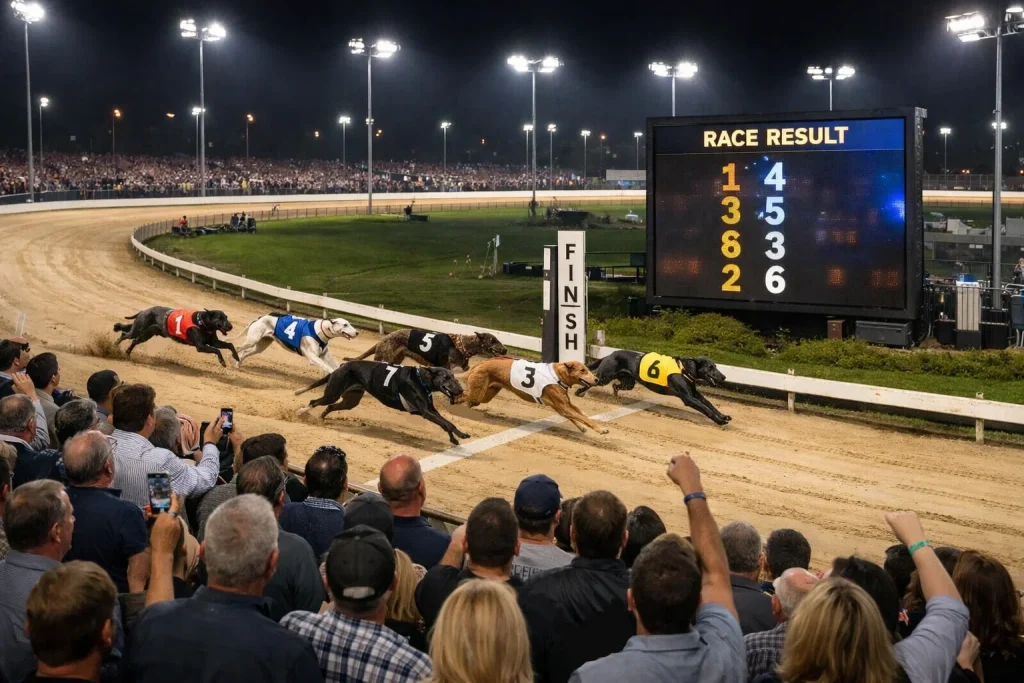
What Finals Night is
Every track has its best night. At Hove, that night has a name — Coral Finals Night. It’s the single fixture in the Hove calendar where the finals of multiple category races converge onto one card, producing the highest-quality racing programme the stadium offers in any given year. I’ve worked the form on every Finals Night card for the last nine years, and the consistent thing about them is that the standard of the field is a step above anything else Hove puts on.
Finals Night isn’t a race. It’s a night of races — a card structured around the culmination of several category competitions that have been running through heats and semi-finals in the preceding weeks. The finals of those competitions land on the same evening, which means the card contains multiple headliners rather than one feature race surrounded by filler. That density of quality is what separates Finals Night from a normal Saturday evening card.
See also: hove greyhound results — your Hove greyhound portal.
Which finals converge on the night
The specific finals that land on Coral Finals Night vary by season, but the core fixtures are drawn from Hove’s category-one programme. The Coral Regency, with its £20,000 prize fund, is the heavyweight. The Coral Brighton Belle, elevated to Category 1 in 2023 with a £10,000 bitches-only purse over 515m, brings a distinct competitive dynamic. Depending on the calendar year, additional category finals and named stakes races fill out the card.
What the convergence does to the form picture. On a normal Saturday evening, the top race on the card might be an A1 open or a single category heat. On Finals Night, the top three or four races are all finals — each featuring the best dogs from weeks of qualifying rounds, each carrying prize money that incentivises peak-performance racing. The form reader isn’t working one headline race and eleven supporting acts; they’re working four or five headline races and a supporting card that’s still graded higher than an average mid-week meeting.
The interaction between finals also matters. Trainers with dogs in multiple finals have to manage their kennel’s resources across the night — warm-up schedules, kennelling order, the trainer’s own attention and focus split between runners. I’ve seen trainers win one final and lose another on the same night because the second dog didn’t get the same intensity of pre-race preparation. Finals Night rewards the trainer who can compartmentalise — who treats each final as a standalone event regardless of what happened in the previous race.
Card shape and prize weighting
Finals Night cards at Hove are constructed with a deliberate shape. The evening opens with one or two graded races — typically A2 or A3, stronger than a normal opener — to establish the evening’s pace and give the crowd time to settle. The first final usually lands in the third or fourth race slot, and from that point the card alternates between finals and high-grade support races, building to the Regency final (when scheduled) in the penultimate or final race of the evening.
Prize weighting across the card is heavily front-loaded toward the finals. The Regency’s £20,000 and the Brighton Belle’s £10,000 between them can exceed the total prize money on a normal week-night card at Hove. That concentration of prize money into a single evening has an economic effect on the betting market — exchange liquidity on Finals Night races is deeper than usual, SP formation is more competitive, and the BSP-to-SP delta (a signal I track closely) tends to narrow because both markets are carrying genuine money.
For the form analyst, the card shape creates an interesting challenge. The high-grade support races between finals aren’t throwaway events — they contain dogs that narrowly missed qualifying for the finals, dogs being prepared for the next category campaign, and dogs whose recent form is strong enough to warrant a Saturday-evening slot on the biggest night of the calendar. These races are often undervalued by punters who focus exclusively on the finals, and the form analyst who treats the supporting card with the same attention finds opportunities that the headline-fixated market misses.
Crowd, atmosphere and broadcast
Finals Night fills Hove. The 2,200-capacity stadium operates at or near its limit, with the Skyline Restaurant fully booked weeks in advance and the grandstand and trackside areas carrying their heaviest crowds of the year. The atmosphere is different from a normal Saturday — louder, more concentrated, with a sense of occasion that regular meetings don’t generate.
Broadcast coverage amplifies the night beyond the stadium. SIS carries the full card live into betting shops and online platforms, and RPGTV schedules Finals Night as a priority fixture. The media exposure means the betting market on Finals Night races draws money from punters who follow the coverage remotely — people who don’t normally bet on Hove but who follow the category-race narratives through SIS and the specialist press. That remote betting volume further deepens exchange liquidity and tightens the pricing.
Atmosphere is hard to quantify but easy to feel. The noise level when the Regency final traps open is the loudest single moment in the Hove year. The crowd reacts to the first bend — if the favourite leads, a roar; if the favourite checks, a groan — and the final straight produces a sustained wall of sound that you can hear from the car park. I’ve been to finals at other tracks, and Hove’s acoustic is distinctive because the stadium’s compact layout puts the crowd close to the action. There’s no separation between the spectators and the racing.
Why Finals Night matters for the calendar
Finals Night is more than the biggest card of the year — it’s the structural anchor that gives the rest of the Hove calendar its purpose. Every category heat, every qualifying round, every graded race that feeds into a category campaign is working toward this evening. The trainers who campaign dogs through the Regency heats in the preceding weeks are doing so because they want a place on this card. The racing manager who schedules heats, semi-finals and qualification rounds is building toward this night.
Explore the Coral Regency history at Hove.
For the form analyst working Hove cards across the full season, Finals Night is the calibration event. The dogs that reach the finals are the best dogs the track has produced in the current season. Their finishing times on Finals Night set the benchmark that every subsequent graded race at Hove is measured against. An A2 dog running a 30.05 at 515m on a Thursday evening in January is running a time that means something only in relation to what the Finals Night A1 and category dogs ran the previous autumn.
One more thing that makes Finals Night matter: it’s the night that defines memories at the track. The races people talk about at the rail in February are Finals Night races from the previous year. The dogs that become names — not just numbers on a card — earn that status on Finals Night. The fixture is where form analysis meets narrative, where data meets drama, and where the Hove calendar condenses its entire season into a single evening. The complete Hove track guide gives the broader calendar context that makes Finals Night’s significance visible across the full racing year.
