
How GBGB Rules of Racing Apply at Hove
 Available in US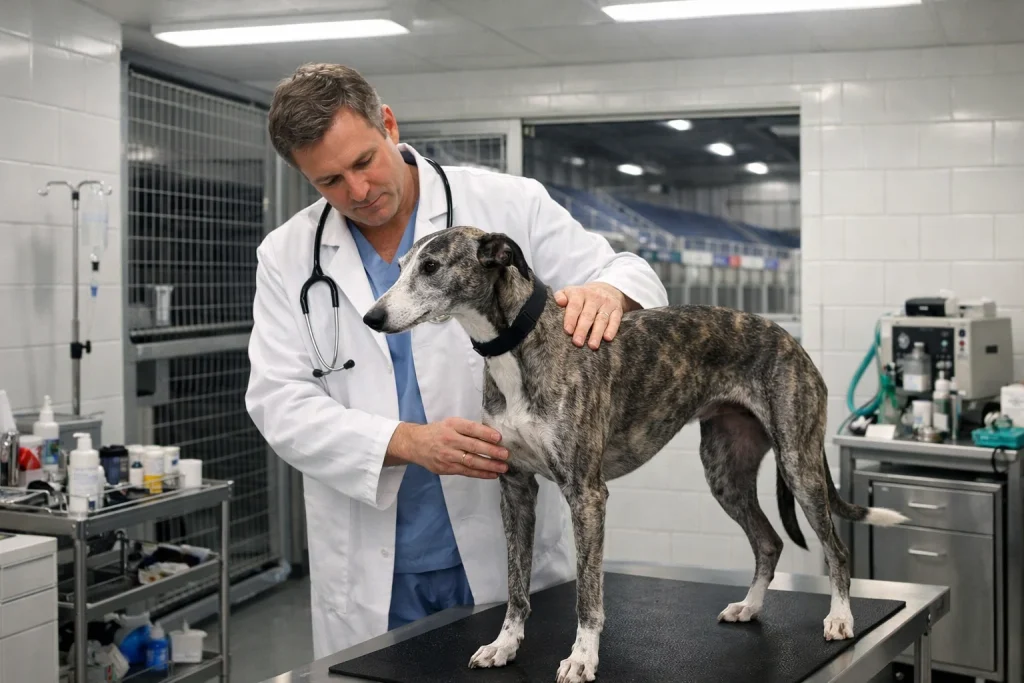
The GBGB rulebook in practice
If you’ve ever stood at the Hove rail and wondered why there’s a ten-minute gap between races, or why a dog was withdrawn after the weigh-in, or why a steward’s enquiry was called after what looked like a clean finish — the answer is the same every time. GBGB Rules of Racing. They govern every licensed meeting at every licensed track in Great Britain, including every one of Hove’s five weekly meetings, and they cover everything from what happens before the dogs leave the kennel block to what happens after the last race finishes.
The registered sector of UK greyhound racing comprises approximately 500 trainers, 3,000 kennel staff and 700 racecourse officials — all operating within the same regulatory framework. What I want to do here is walk through what that framework looks like in practice on a typical Hove race night, because the rules aren’t abstract. They’re visible, physical, and directly relevant to the result you see on the card.
See also: hove greyhound results — your Hove greyhound resource.
Pre-meeting kennelling and inspection
Every dog racing at Hove arrives at the stadium well before the first race and is kennelled in the track’s kennel block, which operates under GBGB specifications for space, temperature, ventilation and cleanliness. The kennelling process is the first regulatory checkpoint of the meeting — no dog bypasses it.
What happens at kennelling. Each dog is identified (by ear brand and microchip), checked for general health by the attending veterinary surgeon, and placed in an individual kennel within the block. Trainers aren’t permitted in the kennel area once the dogs are secured — this separation prevents any last-minute interference with the dog’s condition and ensures the starting field is in the state the vet has inspected.
GBGB delivered a 73% increase in routine visits to residential kennels since the launch of the welfare strategy in 2022, which means the inspection regime doesn’t start at the track — it extends to the trainers’ home kennels, where regional regulatory vets carry out scheduled inspections to verify living conditions, feeding standards and health records. A dog that arrives at Hove for a race meeting has already been subject to a veterinary assessment in its home environment, and the track-side inspection is the second layer of the same process.
Weigh-in and the plus or minus 1 kg tolerance
This is one of the details that new followers of Hove racing find most surprising. Every greyhound is weighed before racing, and the weight is published on the racecard alongside the dog’s name, trap draw and form. The GBGB operates a tolerance band — typically plus or minus one kilogram from the dog’s registered racing weight — and a dog that falls outside that band can be withdrawn from the meeting.
Why weight matters. Greyhound racing is a sport where fractions of a kilogram affect performance. A dog carrying extra weight — even half a kilogram above its racing baseline — runs fractionally slower through the bends, takes slightly longer to accelerate off the break, and produces finishing times that don’t match its grade. A dog below weight may lack stamina over longer distances. The tolerance band isn’t arbitrary — it’s calibrated to ensure each dog races at a weight consistent with the form data on which it was graded.
In practice at Hove, I’ve seen dogs withdrawn at the weigh-in stage on a handful of occasions per season. The withdrawal is listed on the official race result with a notation, and the form implications are significant — a dog pulled for weight on one meeting is flagged for the next, and form readers should note whether the dog returns at a corrected weight or whether the pattern recurs. Repeat weight issues are a form signal about kennel management, not just about the individual dog.
Stewards’ panel and race-day decisions
The stewards at Hove are the rule-enforcement mechanism on race night. A panel — typically three officials, including at least one qualified stipendiary steward — observes every race from a vantage point above the track and has the authority to call enquiries, amend results, issue cautions and refer cases to the GBGB disciplinary process.
What stewards watch for. Interference — a dog impeding another dog’s run through contact, crowding or crossing — is the most common trigger for a stewards’ enquiry at Hove. The panel reviews the race footage, hears from the racing manager and, if necessary, interviews the relevant trainers. Outcomes range from “no further action” (the interference was incidental and didn’t affect the result) through to result amendments (the interfering dog is placed behind the dog it impeded) and disciplinary referrals (the interference was severe enough to warrant investigation into the dog’s behaviour or the trainer’s preparation).
The stewards also enforce the rules around false starts, trap malfunctions, and running-on (a dog that continues to run after the race has ended, potentially at risk of injury). At Hove, where the 455m circumference means the finish line and the start area are in close proximity, false starts and post-race running-on are handled quickly — the physical layout gives the stewards and track staff clear lines of sight to intervene.
For form analysis, stewards’ enquiry outcomes are material. A dog whose finishing position was amended by the stewards has a different form line from the one that would have been recorded without the enquiry. The official GBGB result incorporates all amendments, so by the time the result reaches any form database, the stewards’ decision has already been applied. But the running comments — which describe what the dog actually did during the race, regardless of the official finishing position — preserve the detail that the amended position may obscure.
Post-race sampling and veterinary checks
After racing, the regulatory framework continues. Selected dogs are subject to post-race sampling — urine or blood testing for prohibited substances. The GBGB maintains a list of banned substances, and any positive finding triggers an automatic referral to the disciplinary committee. Trainers are responsible for everything their dog ingests, which means a positive result — even for a medication administered by a vet for a legitimate health reason but not cleared within the withdrawal period — is a disciplinary matter.
Learn about the GBGB injury rate of 10.7 explained.
The sampling procedure at Hove follows GBGB protocol: the selected dog is taken to the sampling kennel, the sample is collected under veterinary supervision, sealed, labelled and sent to the approved laboratory for analysis. The trainer is notified of the sampling and has the right to request a B-sample analysis if the A-sample returns positive. The process is designed to be transparent — trainers know the rules, know the risks, and know that sampling is a routine part of the race-day framework.
Post-race veterinary checks extend beyond sampling. Every dog that finishes a race is observed by the attending vet for signs of injury — lameness, distress, abnormal gait — and any dog that shows symptoms is examined immediately. If an injury is confirmed, the dog is treated and, depending on severity, may be stood down from racing for a mandated recovery period. The injury is recorded in the GBGB database and contributes to the national injury statistics that the Board publishes annually.
The entire rules-of-racing framework — from kennelling through weigh-in, stewards, sampling and post-race vet checks — runs quietly behind every Hove meeting. The complete Hove track guide sets this regulatory structure alongside the form, fixture and welfare data that defines the track.
