
The UK's 74 BAGS Meetings a Week: Scale of Afternoon Racing
 Available in US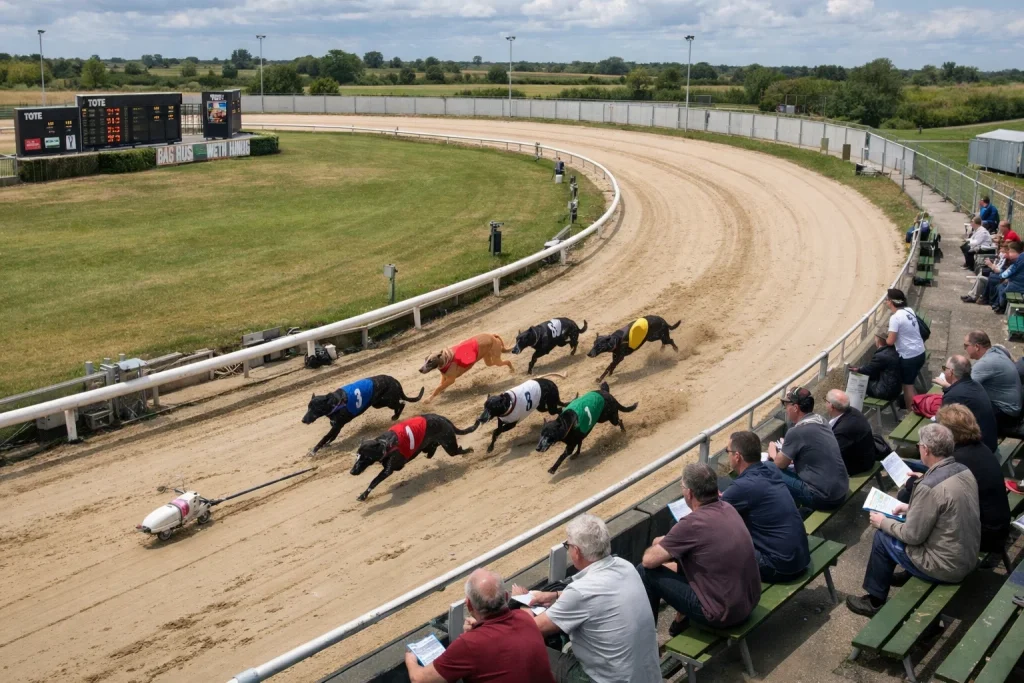
BAGS volume in 2026
The number that catches everyone off guard when I mention it: 74. That’s how many BAGS meetings run every week across GBGB-licensed tracks in the UK. Seventy-four afternoon greyhound fixtures feeding live racing into betting shops, online platforms and exchange markets between Monday morning and Saturday afternoon, week after week, year-round. The Bookmakers Afternoon Greyhound Service is the engine that keeps British greyhound racing commercially viable, and its scale is something most casual punters never think about.
The BAGS generates more than 25,000 races annually, and approximately 5,772 greyhounds compete every week across those 74 meetings. Those numbers aren’t abstract — they represent real dogs, real trainers, real tracks and real betting markets operating at an industrial tempo that dwarfs the evening-card programme most people associate with greyhound racing. Off-course betting turnover on greyhound racing reached approximately £794 million in the year to March 2024, and the BAGS afternoons are where the majority of that turnover is generated.
See also: hove greyhound results — the Hove greyhound racing guide.
74 meetings across the week: day-by-day
The 74 meetings don’t distribute evenly. The BAGS schedule is built around betting-shop opening hours and the gaps in the horse-racing calendar, which means the heaviest concentration falls on weekday mornings and early afternoons — the window before the day’s horse racing starts and the period when betting shops need live content to maintain footfall.
Monday through Friday sees the bulk of the BAGS programme. Multiple tracks run morning meetings (starting as early as 10:00 or 10:30), followed by a second wave of afternoon meetings. Saturday is lighter because evening cards take precedence at most venues. Sunday BAGS meetings exist but in smaller numbers, partly because the Sunday afternoon leisure-card tradition at tracks like Hove serves a different audience from the weekday BAGS market.
What the day-by-day spread means for form. A dog running at Hove on a Wednesday BAGS card has 73 other meetings competing for the same betting-shop and online audience on the same day. The market’s attention is diluted — which means the pricing on a Wednesday Hove BAGS race reflects a thinner liquidity pool than the same race would attract on a standalone evening card. For the form analyst, that liquidity difference translates into wider BSP spreads and less efficient SP formation. The same dog’s form is being priced less precisely on a BAGS card than on a Saturday evening card, and that pricing inefficiency is where value opportunities live.
5,772 dogs weekly: what it means for kennels
Approximately 5,772 greyhounds race every week across the 74 BAGS meetings — a number that quantifies the demand the service places on the UK’s training infrastructure. At roughly 500 licensed trainers managing the racing population, the BAGS schedule requires each kennel to maintain a deep enough squad to field competitive entries multiple times per week, sometimes at more than one track.
For trainers at Hove, the BAGS dog volume has a direct operational implication. Hove contributes its Wednesday afternoon and Friday morning slots to the national BAGS programme, which means Hove trainers need dogs available for those cards in addition to their evening-card entries. A trainer running fifteen dogs in training might enter eight on evening cards and seven on BAGS cards, with some dogs racing twice in a week — once at BAGS and once in the evening. That double-entry pattern is one of the most important form factors to track at Hove: a dog racing Wednesday afternoon and Saturday evening has had three rest days between outings, which is adequate but not generous.
The demand side creates a selection pressure that favours larger kennels. A trainer with twenty-five dogs has the depth to rotate BAGS and evening entries without over-racing any individual. A trainer with eight dogs has to make harder choices — race more frequently to fill card slots, or rest dogs and lose income from entries not made. The BAGS volume is, quietly, one of the structural forces shaping which kennels thrive at Hove and which struggle to maintain their standings.
The 71% growth since 2017
The 5,772 dogs competing weekly in BAGS meetings represents a 71% increase from the 3,360 dogs that were racing weekly in 2017. That growth curve is one of the most dramatic in any sector of UK greyhound racing, and it tells a story about what happened to the sport’s business model over the last decade.
The driver. Bookmaker demand for live content. As betting shops faced pressure from online migration and the 2019 FOBT stake cut (which reduced maximum stakes on fixed-odds betting terminals from £100 to £2), greyhound racing filled the content gap. Shops needed events to screen, punters needed something to bet on between horse races, and the BAGS service expanded to meet that demand. More meetings, more races per meeting, more dogs per week.
What the growth means for welfare and form quality. More BAGS races means more race runs, which contributes to the denominator in GBGB’s injury-rate calculations. The growth also means more racing opportunities for lower-grade dogs — the dogs that fill A6 through A9 races on BAGS cards, dogs that might not have raced at all a decade ago, are now racing regularly. That increased racing frequency for lower-grade dogs has implications for injury exposure, career length and retirement timing that the welfare framework is still adapting to manage.
For form analysis, the growth trend matters because it changes the competitive context of BAGS results. A BAGS card in 2017 featured a smaller, tighter pool of dogs. A BAGS card in 2026 features a larger, more diffuse pool. Times recorded on a 2026 BAGS card are produced against a wider range of opposition quality than the same grade would have faced in 2017, which means historical comparisons of BAGS-era form across the decade need adjustment.
BAGS and Hove’s weekly afternoon slots
Hove feeds two meetings per week into the BAGS programme — Wednesday afternoon and Friday morning. Those two slots are Hove’s contribution to the national afternoon-racing schedule, and they occupy a specific position in the stadium’s weekly rhythm.
Learn about BAGS greyhound service at Hove.
Wednesday afternoon is the more prominent of the two. It draws a regular rota of entries from Hove-resident trainers, produces a card that’s typically 10 to 12 races deep, and feeds into the SIS broadcast pipeline alongside all the other BAGS meetings running simultaneously across the country. The grade mix is mid-to-lower — A4 through A8, with occasional A3 headliners — and the form quality is consistent but below evening-card standard.
Friday morning is the quieter slot. The card is often shorter, the fields sometimes include dogs that haven’t been entered earlier in the week (because the trainer held them for a specific Friday opportunity), and the betting-market interest is the thinnest of any Hove meeting. For the form analyst, Friday morning results carry the least predictive weight for future racing — but they’re not irrelevant. A dog that wins well on a Friday morning has demonstrated something, even if the competition was softer. The question is always what the Friday result means for the dog’s next outing on a Thursday or Saturday evening card.
The relationship between Hove’s BAGS slots and its evening programme is symbiotic. The afternoon cards give lower-grade dogs racing opportunities that keep them race-fit and in the grading system. The evening cards give higher-grade dogs the competition level and betting-market depth that justify their training costs. Remove the BAGS programme and the entire Hove grading pyramid loses its base — the A6 through A9 dogs that graduate upward through the grades after proving themselves on afternoon cards. The complete Hove track guide covers how the BAGS and evening programmes fit together within the five-meeting weekly structure.
